AME vs Aeronautical Engineering: Which Is Better?
Compare AME vs Aeronautical Engineering in India, including eligibility, course structure, licensing, career options and job prospects.
AME vs Aeronautical Engineering: Which Should You Pick?
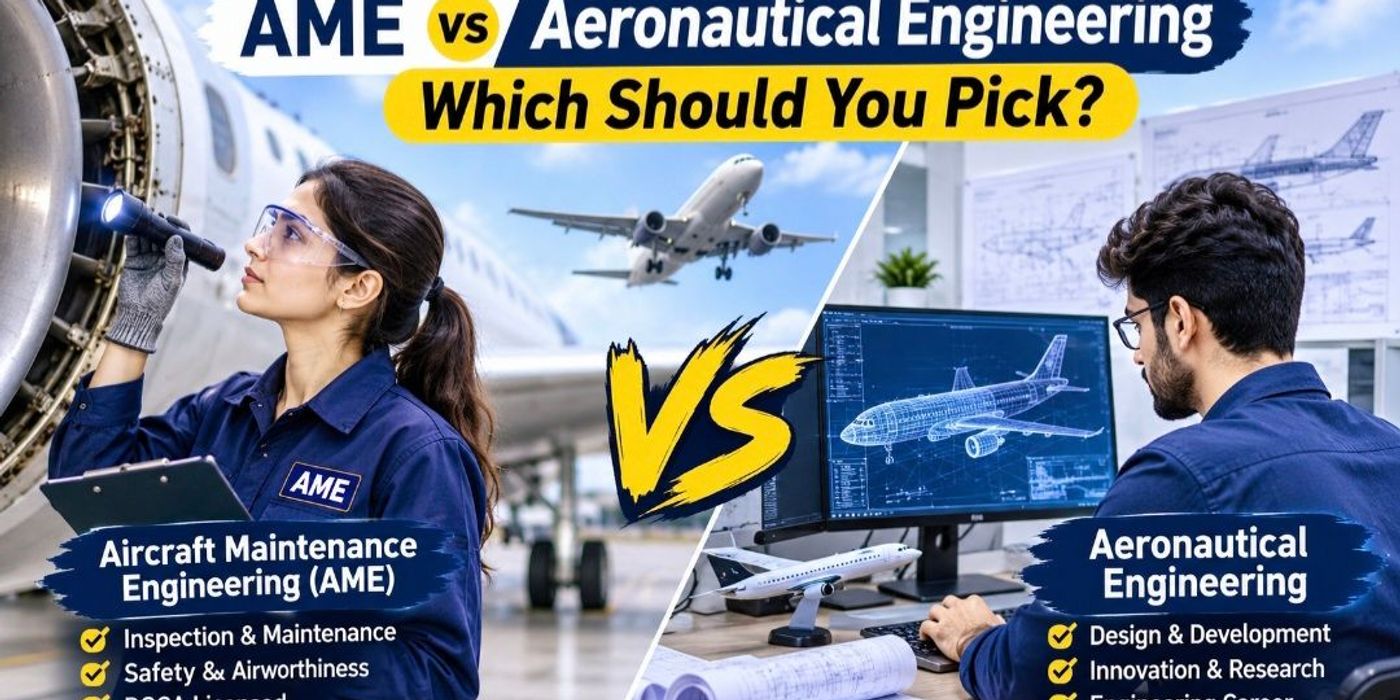
A career in aviation can be exciting and confusing at the same time. After Class 12, two popular streams are Aircraft Maintenance Engineering (AME) and Aeronautical Engineering. AME mainly covers the inspection, maintenance and certification of aircraft, while Aeronautical Engineering mainly covers the design, development and improvement of aircraft.
So which should you choose? It depends on whether you'd rather work hands-on with aircraft or be involved in engineering design and development.
Aircraft Maintenance Engineering (AME): What Is It?

Aircraft Maintenance Engineering is a specialist stream of aviation that deals with the upkeep of aircraft safety and airworthiness. AMEs inspect aircraft, check for technical problems, maintain engines and systems, repair and replace parts, and verify aircraft maintenance standards.
The Directorate General of Civil Aviation (DGCA) is responsible for licensing of aircraft maintenance in India as prescribed in CAR-66. Training organisations approved under CAR-147 (Basic) provide the approved basic maintenance training. But one doesn't become an AME just by taking an AME course. The knowledge, examination, practical training and maintenance-experience requirements must be fulfilled before candidates apply for a licence. Our guide explains the full licensing process.
The two main licence categories are B1 (Mechanical) and B2 (Avionics). Certification privileges depend on the category and aircraft ratings.
What Is Aeronautical Engineering?
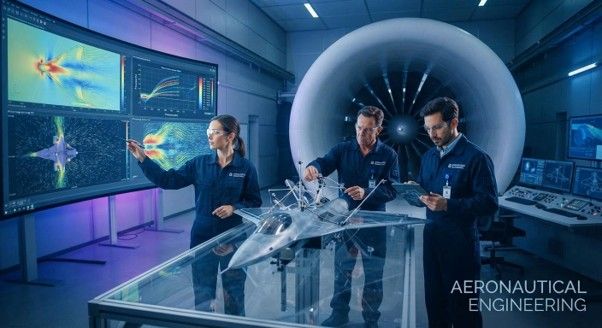
Aeronautical Engineering is an academic course focused on aircraft that operate within Earth's atmosphere. Students learn about the design, construction and testing of aircraft, including the forces involved in flight: lift, thrust, drag and weight.
A BTech or BE course can be completed in four years, but students should verify the duration and curriculum with the university. Typical core subjects include aerodynamics, aircraft structures, propulsion, flight mechanics, materials science, thermodynamics, avionics and aircraft control systems. Students can also use computer-aided design and engineering simulation tools.
Aeronautical Engineering is a broader academic subject than Aircraft Maintenance. Employment opportunities include aircraft design, manufacturing, testing, research and engineering analysis. The degree does not automatically grant the DGCA licence or certification privileges required to release an aircraft after maintenance.
AME vs Aeronautical Engineering: Key Differences
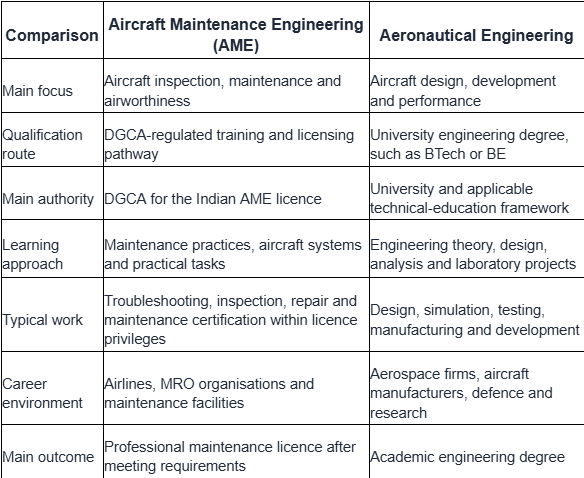
The primary distinction is accountability. An AME's job is to make sure an aircraft is safe to fly after maintenance work. An aeronautical engineer is responsible for the engineering aspects of designing, improving or manufacturing aircraft.
Course Subjects and Practical Training
AME students learn maintenance procedures, aviation regulations, human factors, aircraft structures, aircraft engines, basic electricity, aircraft electronics and systems. Practical experience is important, as it requires correct use of tools, proper procedures and accurate documentation when maintaining the aircraft.
Aeronautical Engineering students study mathematics, fluid mechanics, thermodynamics, materials, aerodynamics, propulsion, flight dynamics, structures and control systems. They may work on design projects, lab activities, simulation exercises and internships.
Both courses involve aeronautics, physics and problem-solving. AME is more the "nuts and bolts" of aircraft operation, while Aeronautical Engineering provides a wider base for engineering jobs and aircraft design.
Eligibility and Duration of Course in India
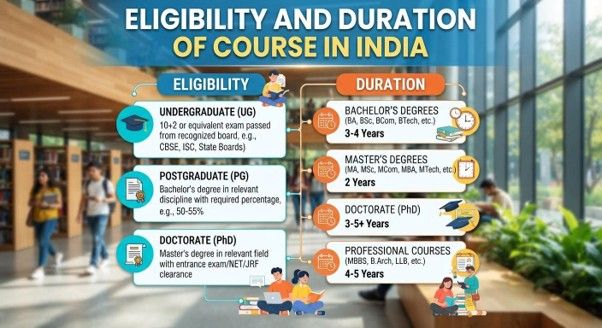
CAR-66 requires Physics, Chemistry and Mathematics for the Indian AME licence, and Class 10 Physics and Chemistry is accepted as an alternative to Class 12 Physics and Chemistry. Applicants must be at least 18 years old at the time of application. There may be further entrance requirements, and programmes differ in length. See our detailed guide on AME eligibility criteria and B.Sc. options for more.
Most BTech/BE programmes in Aeronautical Engineering require Class 12 Physics and Mathematics, and may have additional requirements or entrance exams set by the institution. The degree is usually four years long. Verify eligibility, approval and affiliation with the institution.
A crucial difference: in a Lok Sabha answer, the Ministry of Civil Aviation stated that the AME licence is not a degree or diploma. In India it is considered a professional licence. Students should find out exactly what they will receive from an institute, and what other requirements must be met for licensing.
Career Opportunities for AME
After completing the prescribed training and service experience, AME candidates can join airline maintenance departments, Maintenance, Repair and Overhaul (MRO) organisations and aircraft maintenance facilities. Job areas include mechanical work, avionics, inspections and troubleshooting. To see what aircraft maintenance engineers do day to day, read our guide on the role.
Licence types, aircraft types and ratings, experience, competence and maintenance organisation authorisations all affect career progression. A course certificate alone does not give anyone the authority to certify an aircraft for return to service.
Career Opportunities After Aeronautical Engineering
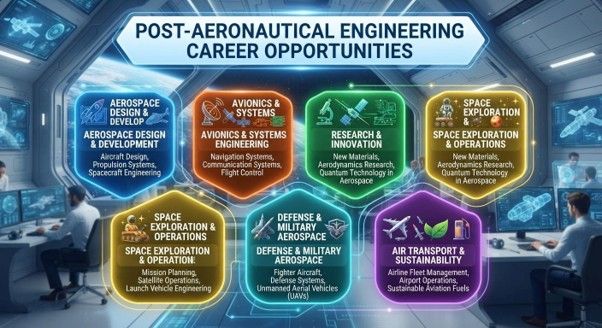
Aeronautical Engineering graduates can work as aerodynamics engineers, aircraft design engineers, structural analysts, propulsion engineers, avionics engineers, manufacturing engineers, quality engineers or research engineers. Employers include aerospace and defence manufacturers, materials companies, consultancies and research institutions.
Graduates can also pursue postgraduate courses in aerospace engineering, propulsion, computational fluid dynamics, aircraft structures and flight mechanics. Employment depends on technical skills, projects, internships, academic background and employer demand.
Which Course Offers a Broader Scope and Salary?
Neither course is automatically better in scope or salary. AME is a specialist pathway in aircraft maintenance that comes with licensing requirements, practical experience and aircraft competency. Aeronautical Engineering is a wider engineering degree that may lead to design, analysis, manufacturing and research roles.
Pay varies depending on the employer, location, experience, licence status and job responsibility. Neither course guarantees a high salary or a job at a major airline or manufacturer. Check confirmed listings and job requirements, not promises.
Course cost is also worth comparing before you decide. Our breakdown of AME course fees in India shows what to expect.
How to Choose the Right Course
Choose AME if you:
- Enjoy working with equipment, tools and machines
- Enjoy troubleshooting issues
- Value thoroughness and safety when doing work
- Are comfortable following procedures and instructions
- Are comfortable with complexity and documentation
- Are okay with examinations, practical assessments and licensing
Choose Aeronautical Engineering if you:
- Have an aptitude and inclination for mathematics, physics and engineering
- Appreciate understanding design, manufacturing and other aspects of aircraft, and enjoy problem solving
- Want to study further towards postgraduate and/or doctoral degrees
- Want to work in research, testing and other areas of aerospace
Always verify a college's approval and scope. For AME, check the DGCA CAR-147 (Basic) approval and the licence category supported. For Aeronautical Engineering, check university affiliation, approvals, curriculum, labs and equipment, faculty, and placement and employment records. Avoid colleges that make unsubstantiated job offers.
Final Verdict
Ultimately, the choice between AME and Aeronautical Engineering comes down to what you want to do in aviation. If your aim is to work hands-on with aircraft and work towards maintenance certification, AME would be the better choice. You can explore our AME course for the B1.1 and B2 categories. If, on the other hand, you want to study the design and manufacture of aircraft and systems, Aeronautical Engineering may be the better option.
Both options have their appeal. It is best to look into the profession and understand what the qualification and day-to-day work involve. If AME appeals to you, find out how to start a career in aviation maintenance. Choose a profession that matches your interests, not one you pick because it is perceived to be better or higher in society.
Not sure which path suits you? Talk to a mentor for FREE counselling.